Sieben von zehn legen in den Warenkorb — und kaufen nie: Wohin deine kaufbereiten Besucher verschwinden
Sie haben dein Produkt gesucht, gefunden, in den Warenkorb gelegt — und sind weg. Das sind keine zufälligen Besucher, das sind deine kaufbereitesten Kunden. Warum sie im letzten Moment abspringen — und wie du den Zweifel killst, bevor er den Kauf killt.

Es gibt einen Besucher, der dich mehr Geld kostet als jeder andere. Es ist nicht der, der auf deine Startseite kommt und sofort wieder geht. Es ist der, der dein Produkt gesucht, gefunden, angeklickt und in den Warenkorb gelegt hat — und dann nicht gekauft hat.
Dieser Mensch hat dir alles gezeigt, was du dir wünschst: Interesse, Absicht, einen Klick auf „In den Warenkorb". Er war so nah dran wie kein anderer. Und trotzdem ist er weg.
Branchenübergreifend liegt die Warenkorb-Abbruchrate bei rund 70 %. Sieben von zehn Menschen, die schon „Ja" gesagt haben, sagen an der Kasse wieder „Nein". Das ist kein Traffic-Problem. Das ist ein Vertrauens-Problem in den letzten Sekunden.
Warenkorb-Abbruch ist selten ein Versand-Problem
Die übliche Erklärung lautet: zu hohe Versandkosten, zu komplizierter Checkout, Zwang zum Konto anlegen. Das stimmt — teilweise. An diesen Stellen kannst und solltest du arbeiten.
Aber es gibt einen zweiten, leiseren Abbruchgrund, über den kaum jemand redet: der letzte Zweifel. Der Moment, in dem der Käufer kurz vor dem Bezahlen noch einmal innehält und denkt: „Sieht das wirklich so aus wie auf dem Bild? Ist die Größe so, wie ich glaube? Ist das echt — oder nur ein gut gemachtes Foto?"
Diesen Zweifel siehst du in keiner Statistik. Er taucht nicht als „Versandkosten zu hoch" in der Umfrage auf. Er passiert stumm, in einer halben Sekunde, und endet mit einem geschlossenen Tab.
Der letzte Zweifel killt den Kauf
Stell dir den typischen Ablauf vor. Jemand legt deine Jacke, deine Lampe, dein Werkzeug in den Warenkorb. Vorfreude. Dann der kurze mentale Check, bevor das Geld fließt: „Will ich das wirklich?"
Bei diesem Check entscheidet nicht dein Preis. Es entscheidet, wie sicher sich der Käufer fühlt. Und Sicherheit entsteht aus dem, was er sieht — nicht aus dem, was du schreibst. Niemand liest an der Kasse noch deine Produktbeschreibung. Er schaut auf das, was er vom Produkt im Kopf hat.
Und genau hier verlieren reine Foto-Listings. Ein Foto zeigt eine eingefrorene Sekunde aus einem perfekten Winkel. Es beantwortet nicht: Wie fällt das Licht darauf? Wie groß ist es in der Hand? Bewegt sich der Stoff so, wie ich hoffe? Der Zweifel bleibt unbeantwortet — und unbeantworteter Zweifel ist im E-Commerce ein „Nein".
Warum Bewegung im letzten Moment wirkt
Ein Produktvideo macht etwas, das kein Foto kann: Es nimmt dem Käufer die offene Frage ab, bevor sie zum Abbruch wird.
- Es zeigt das Produkt aus mehreren Winkeln in Bewegung — die Frage „wie sieht es von der Seite aus?" stellt sich gar nicht erst.
- Es zeigt Maßstab und Proportion — die Frage „ist das größer oder kleiner als gedacht?" beantwortet sich von selbst.
- Es signalisiert Echtheit — „dieses Produkt existiert wirklich, jemand hat es gefilmt." In Zeiten, in denen jeder zweite Shop mit KI-Bildern arbeitet, ist das ein echter Vertrauensanker.
Das Resultat ist kein Marketing-Effekt, sondern ein psychologischer: Der Käufer geht mit weniger offenen Fragen zur Kasse. Weniger offene Fragen heißt weniger letzte Zweifel. Weniger letzte Zweifel heißt mehr abgeschlossene Käufe — aus exakt demselben Traffic, den du heute schon hast.
„Aber ich kann nicht für jeden Warenkorb-Abbrecher ein Video drehen"
Genau das ist der Punkt, an dem die meisten Shops aufgeben. Der Effekt ist verstanden — die Umsetzung scheitert. Wer 200 Produkte hat, dreht nicht für jedes einzeln ein Video, schneidet, lädt hoch, bindet ein. Das ist ein Vollzeitjob, kein Nachmittag.
Deshalb bleibt das Thema seit Jahren bei fast jedem Händler offen. Nicht aus Unwissen — aus Aufwand.
Der pragmatische Ausweg
Mit Buust verbindest du deinen Shop oder Marktplatz-Account, ziehst alle Produkte auf einmal, wählst ein Template — und in dreißig Minuten hat dein gesamter Katalog Videos. Direkt auf der Produktseite, ohne dass du das Theme anfasst, ohne dass du pro Listing klickst.
Du veränderst nichts an deinem Marketing und gibst kein zusätzliches Werbebudget aus. Du gibst nur denselben kaufbereiten Besuchern eine Produktseite, die den letzten Zweifel ausräumt, statt ihn stehen zu lassen.
Starte kostenlos und sieh dir an, wie deine drei meistverkauften Produkte mit Bewegung aussehen. Keine Kreditkarte, keine Verpflichtung — nur der ehrliche Test, wie viele deiner sieben Abbrecher in Wahrheit nur einen Grund zum „Ja" gebraucht hätten.
Häufige Fragen zum Thema
Wie hoch ist die durchschnittliche Warenkorb-Abbruchrate im Online-Handel?+
Branchenübergreifend liegt sie laut diversen Erhebungen bei rund 70 %, auf Mobilgeräten oft noch höher. Das heißt: Von zehn Menschen, die ein Produkt in den Warenkorb legen, schließen im Schnitt nur etwa drei den Kauf ab.
Sind Warenkorb-Abbrecher verlorene Kunden?+
Nein — es sind deine wertvollsten. Sie haben bereits Kaufabsicht gezeigt. Ein kleiner Vertrauens- oder Klarheits-Schub reicht oft, um den Abschluss doch noch auszulösen. Hier ist der Hebel auf der ganzen Customer-Journey am größten.
Senken Produktvideos die Warenkorb-Abbruchrate?+
In vielen Kategorien ja. Video reduziert die Unsicherheit „sieht das wirklich so aus?", die ein häufiger stiller Abbruchgrund ist — besonders dort, wo Material, Größe oder Funktion über den Kauf entscheiden.
Was ist neben Versandkosten der häufigste Grund für Warenkorb-Abbrüche?+
Unsicherheit. Käufer brechen ab, wenn sie nicht sicher sind, ob das Produkt ihren Erwartungen entspricht. Sichtbare Bewegung und ein klarer Maßstab räumen genau diesen Zweifel aus, bevor er zum Abbruch wird.
Bereit, deine Listings auf Video umzustellen?
10 Videos kostenlos. Keine Kreditkarte. In unter 5 Minuten verbunden.
Weiterlesen

Was kostet ein Produktvideo 2026? Agentur, Freelancer, KI — der ehrliche Kostenvergleich
Ein einzelnes Produktvideo bei einer Agentur kostet schnell mehrere hundert bis tausend Euro. Für einen Katalog mit hunderten Artikeln ist das utopisch. Der ehrliche Vergleich zwischen Agentur, Freelancer und KI — mit den versteckten Kosten, die selten jemand nennt.
Anprobe direkt im Shop: Wie virtuelle Try-Ons Retouren senken
Die teuerste Retoure ist die, die nie hätte passieren dürfen — bestellt „zum Probieren in zwei Größen". Eine virtuelle Anprobe beantwortet die „Passt das zu mir?"-Frage vor dem Kauf. So funktioniert Try-On im eigenen Shop.
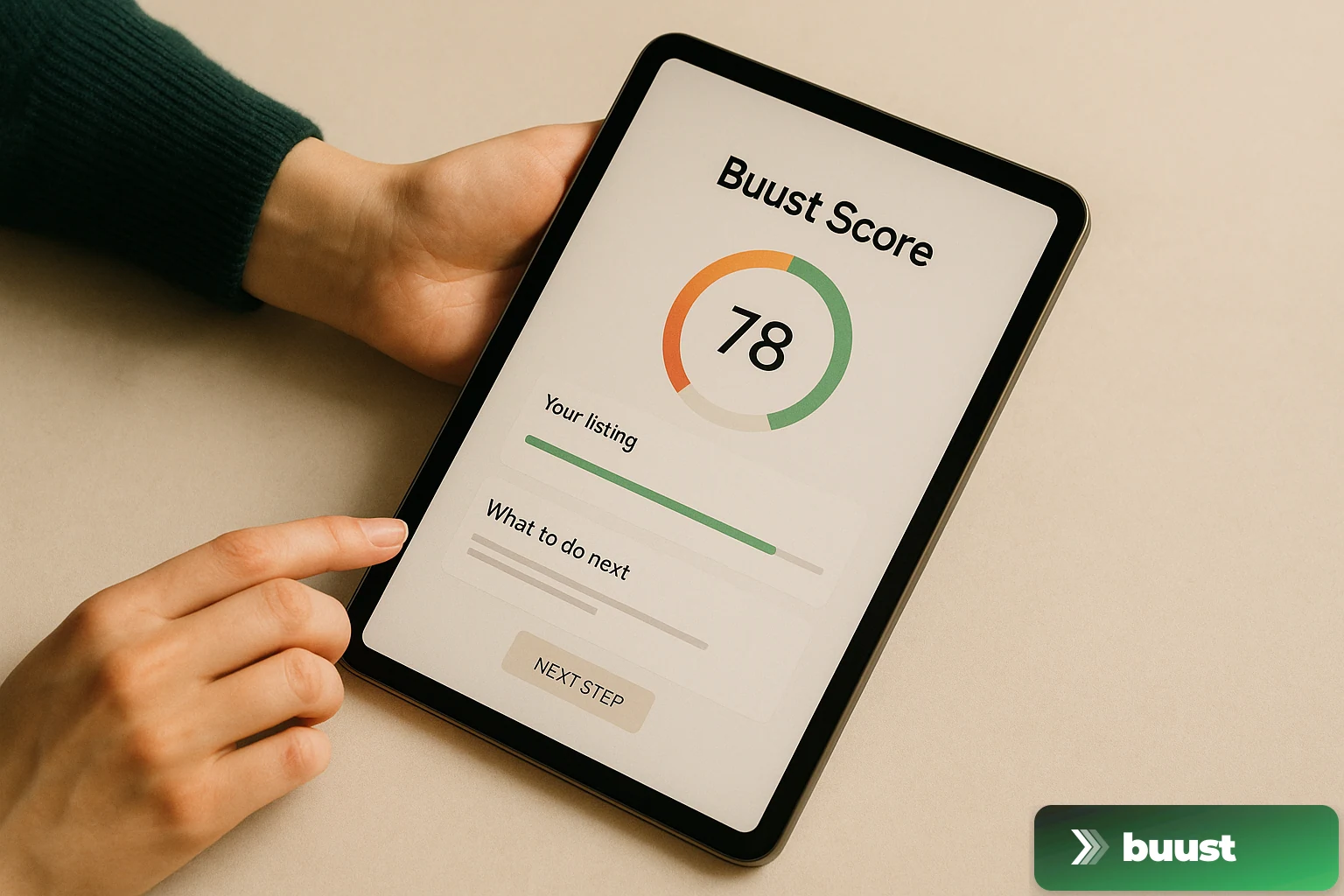
Der Buust-Score: Wie gut verkauft dein Listing — und was du als Nächstes tun solltest
Die meisten Listings sind nicht schlecht — sie sind nur an einer Stelle schwach, und niemand sagt dir, an welcher. Der Buust-Score macht aus „irgendwie optimieren" eine Zahl und genau einen nächsten Schritt. So liest du ihn richtig.