Deine Kunden kaufen — aber nur ein einziges Produkt. So holst du den zweiten Kauf
Sie kaufen. Aber sie kaufen eins, zahlen, sind weg. Dabei hätten viele gern mehr mitgenommen — sie haben es nur nie gesehen. Warum dein Warenkorbwert auf dem Tisch liegen bleibt, und wie du aus demselben Kunden mehr machst, ohne aufdringlich zu sein.

Die meisten Shop-Betreiber kämpfen um eine einzige Zahl: die Conversion-Rate. Kaufen oder nicht kaufen. Dabei gibt es eine zweite Zahl, die mindestens so viel Umsatz versteckt — und über die kaum jemand redet: wie viel ein Kunde kauft, wenn er schon kauft.
Der typische Ablauf in den meisten Shops sieht so aus: Kunde kommt, findet sein Produkt, legt es in den Warenkorb, bezahlt, ist weg. Ein Produkt. Eine Bestellung. Fertig. Und das fühlt sich nach Erfolg an — schließlich hat er ja gekauft.
Aber viele dieser Kunden hätten gern mehr mitgenommen. Sie haben es nur nie gesehen.
Der teuerste Moment ist der, in dem du nichts mehr zeigst
Denk an deinen letzten Kauf in einem guten Laden. Du wolltest die Schuhe — und an der Kasse lag das passende Pflegespray, das du dir sonst nie überlegt hättest. Du hast es mitgenommen. Nicht, weil dich jemand bedrängt hat, sondern weil es im richtigen Moment sichtbar war.
Online passiert genau dieser Moment meistens nicht. Der Kunde landet auf einer Produktseite, sieht ein Produkt, kauft ein Produkt. Was noch dazugepasst hätte — das Zubehör, die zweite Farbe, das Set statt des Einzelteils — bleibt unsichtbar. Und was unsichtbar ist, wird nicht gekauft.
Du verlierst hier keinen Kunden. Du verlierst Umsatz pro Kunde. Und das ist der günstigste Umsatz, den es gibt: Der Mensch ist bereits da, hat bereits Vertrauen gefasst, hat die Kreditkarte schon in der Hand.
Warum ein Hinweis allein nicht reicht
Viele Shops haben „Das könnte dir auch gefallen"-Reihen. Und trotzdem klickt kaum jemand drauf. Warum? Weil es nur kleine, statische Thumbnails sind — und ein kleines Standbild löst kein Begehren aus. Es ist ein Hinweis, kein Verkaufsargument.
Damit ein Kunde ein zweites Produkt kauft, muss er es in Sekunden verstehen und wollen. Genau das leistet ein Foto nicht — und genau das leistet Bewegung.
Was Video für den Zweitkauf ändert
Ein Käufer, der gerade sein Hauptprodukt überzeugend im Video gesehen hat, ist im Vertrauens-Modus. Dieser Modus strahlt auf das nächste Produkt ab — wenn das nächste Produkt genauso überzeugend gezeigt wird.
- Ein bewegtes Folgeprodukt wird in Sekunden begehrenswert, nicht erst nach drei Klicks und einer Beschreibung.
- Bewegung in der „Passt dazu"-Reihe stoppt den Daumen, der sonst direkt zur Kasse weiterwischt.
- Das Zusatzprodukt wirkt wie eine hilfreiche Ergänzung, nicht wie aufdringliches Cross-Selling — weil der Kunde sofort sieht, warum es passt.
Das Ergebnis ist ein höherer Warenkorbwert aus exakt demselben Traffic. Du musst keinen einzigen neuen Besucher gewinnen. Du musst nur dem Kunden, der ohnehin kauft, im richtigen Moment das richtige zweite Produkt zeigen — überzeugend genug, dass er „ja, das auch" denkt.
„Aber das wird ein Riesenaufwand"
Ja — wenn du es von Hand machst. Für jedes Haupt- und jedes Zusatzprodukt einzeln ein Video zu drehen, zu schneiden und an der richtigen Stelle einzubinden, ist genau der Aufwand, an dem die meisten scheitern. Deshalb bleibt der Warenkorbwert bei fast allen Shops da, wo er ist.
Der pragmatische Ausweg
Mit Buust ziehst du deinen kompletten Katalog auf einmal, wählst ein Template und erzeugst in dreißig Minuten Videos für alle Produkte — auch für genau die, die als Cross-Sell neben deinen Bestsellern stehen. Damit das Hauptprodukt und das passende Zubehör beide bewegt sind, statt nur das eine.
Du veränderst nichts an deinem Marketing und gewinnst keinen neuen Besucher dazu. Du machst nur aus jedem Kauf einen etwas größeren — und das summiert sich über jeden einzelnen Kunden.
Starte kostenlos und sieh dir an, wie deine drei meistverkauften Produkte mit Bewegung aussehen. Danach entscheidest du, ob auch die Produkte, die daneben kaufen könnten, bewegt werden sollen.
Häufige Fragen zum Thema
Was ist der durchschnittliche Bestellwert (AOV) und warum ist er wichtig?+
Der durchschnittliche Bestellwert ist der Umsatz pro Bestellung. Ihn zu erhöhen ist oft günstiger als neue Besucher zu kaufen, weil der Kunde bereits da ist und bereits Vertrauen gefasst hat. Ein Euro mehr pro Bestellung skaliert über den ganzen Traffic.
Wie erhöht man den Warenkorbwert, ohne aufdringlich zu wirken?+
Indem du passende Produkte sichtbar machst, statt sie aufzudrängen. Ein gut platziertes, relevantes Folgeprodukt mit überzeugender Darstellung wirkt wie ein hilfreicher Hinweis, nicht wie ein Verkaufsdruck. Bewegtbild hilft, weil es das Zusatzprodukt schnell begehrenswert macht.
Helfen Produktvideos beim Cross-Selling?+
Ja. Ein Käufer, der ein Produkt im Video überzeugend gesehen hat, baut Vertrauen auf, das auf passende Zusatzprodukte abstrahlt. Video macht ein zweites Produkt in Sekunden verständlich und begehrenswert — der entscheidende Auslöser für den Zusatzkauf.
Lohnt sich die Arbeit am Warenkorbwert auch bei kleinem Sortiment?+
Gerade dann. Wenn du wenige Produkte hast, ist jedes zusätzliche Teil im Warenkorb ein großer relativer Hebel. Schon eine Hand voll überzeugend dargestellter Cross-Sells kann den durchschnittlichen Bestellwert spürbar heben.
Bereit, deine Listings auf Video umzustellen?
10 Videos kostenlos. Keine Kreditkarte. In unter 5 Minuten verbunden.
Weiterlesen

Was kostet ein Produktvideo 2026? Agentur, Freelancer, KI — der ehrliche Kostenvergleich
Ein einzelnes Produktvideo bei einer Agentur kostet schnell mehrere hundert bis tausend Euro. Für einen Katalog mit hunderten Artikeln ist das utopisch. Der ehrliche Vergleich zwischen Agentur, Freelancer und KI — mit den versteckten Kosten, die selten jemand nennt.
Anprobe direkt im Shop: Wie virtuelle Try-Ons Retouren senken
Die teuerste Retoure ist die, die nie hätte passieren dürfen — bestellt „zum Probieren in zwei Größen". Eine virtuelle Anprobe beantwortet die „Passt das zu mir?"-Frage vor dem Kauf. So funktioniert Try-On im eigenen Shop.
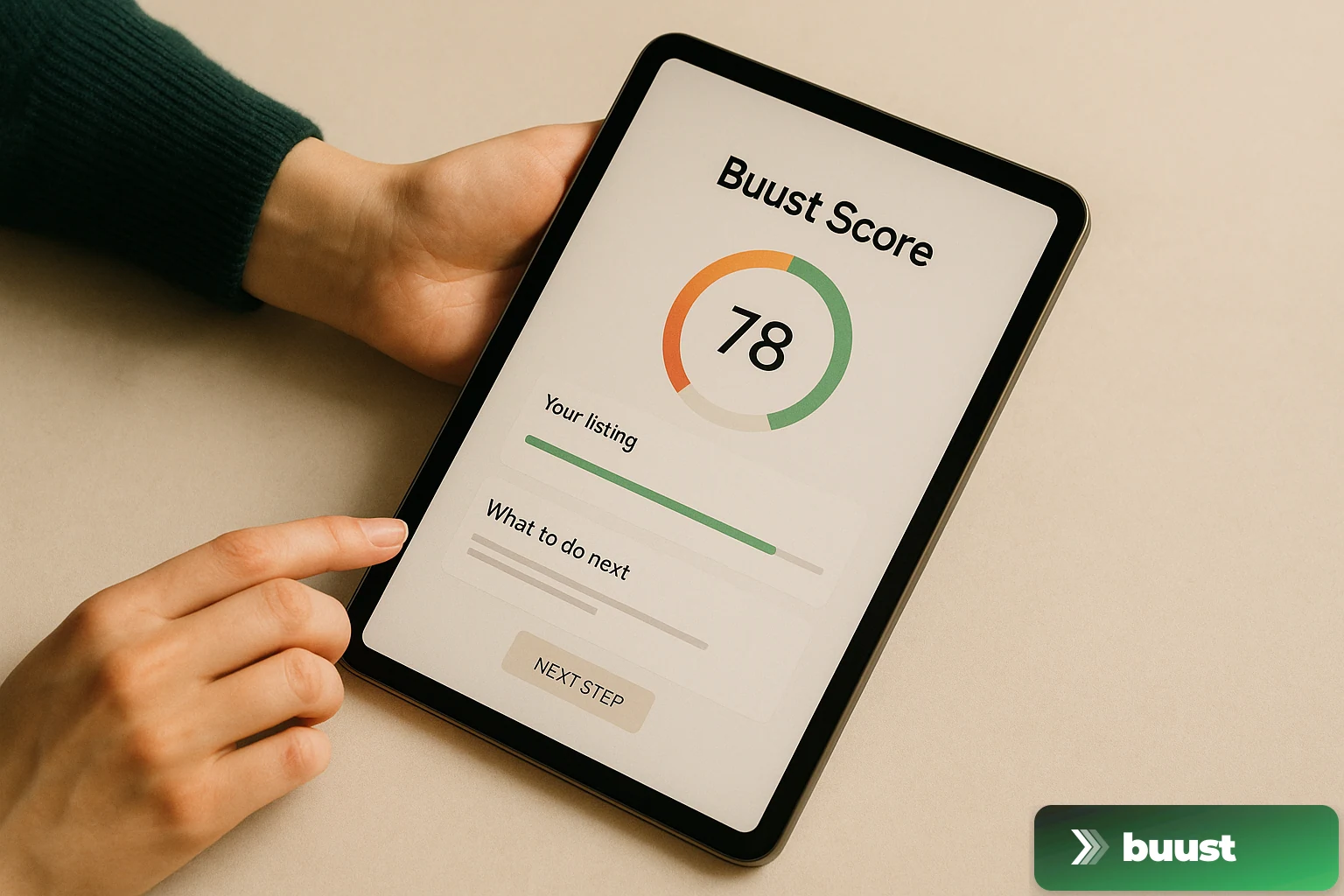
Der Buust-Score: Wie gut verkauft dein Listing — und was du als Nächstes tun solltest
Die meisten Listings sind nicht schlecht — sie sind nur an einer Stelle schwach, und niemand sagt dir, an welcher. Der Buust-Score macht aus „irgendwie optimieren" eine Zahl und genau einen nächsten Schritt. So liest du ihn richtig.