Why Your First Product Video Doesn't Have to Be Pretty
A plain zoom clip looks unspectacular — and still beats every listing without video. Why the ROI isn't in the individual clip but in the fact that your 200 products even have one. And what comes after.

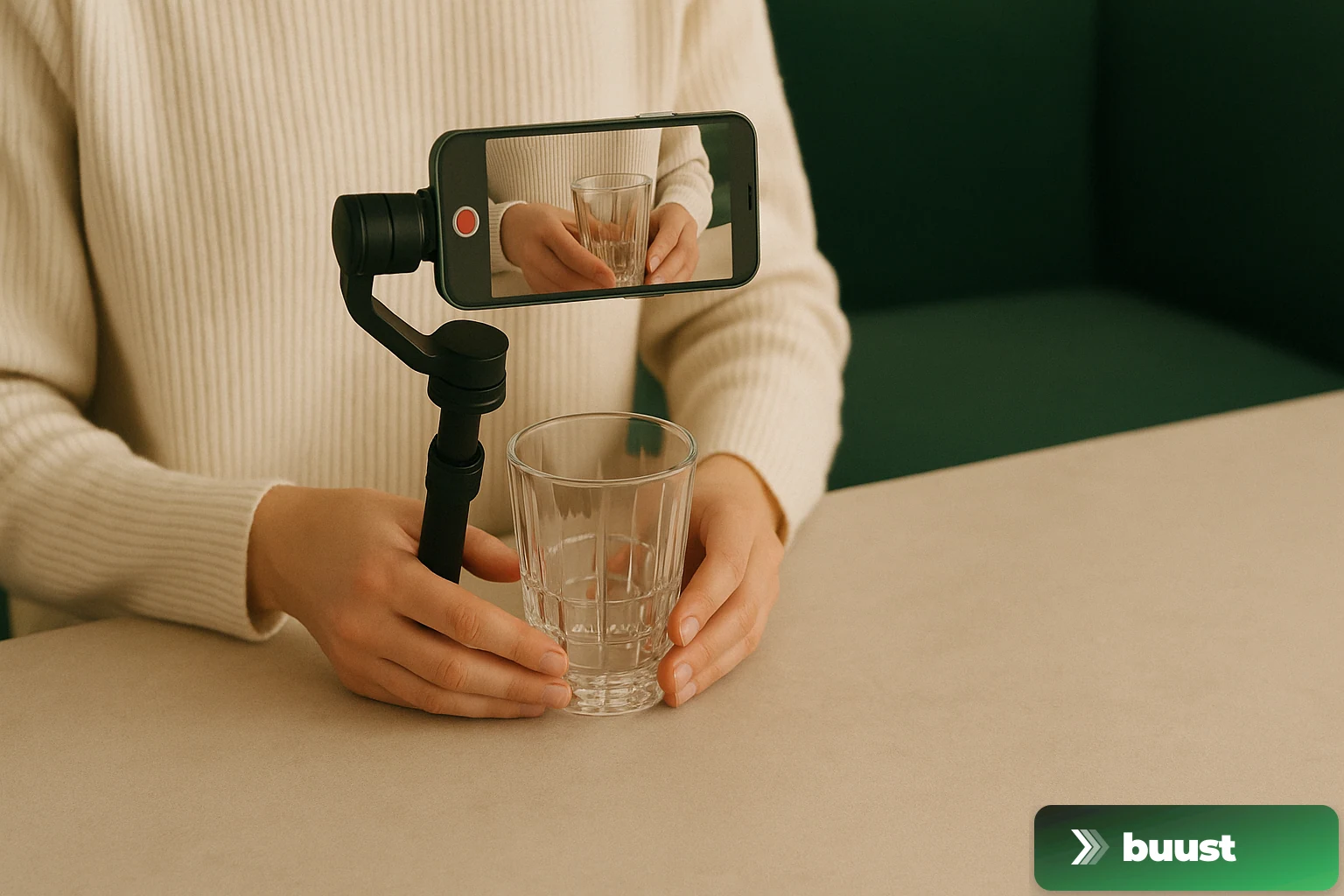
Last week someone wrote me about one of our demo videos:
"The approach is interesting, but with these static zoom-in, zoom-out videos I don't see the benefit. Is this for TikTok, or what's it for?"
Fair question. And I think it misses the actual point — so here's the longer answer.
The comparison isn't "Hollywood spot"
When a merchant has 200 products in the shop, the reality looks like this: zero videos. Not because they don't want video. Because an agency charges between €200 and €800 per clip. 200 products times €500 is €100,000. Nobody does that.
So "is this zoom clip pretty?" is the wrong question. The right one is: does your listing have motion at all? Anyone who has understood how 100 sales videos in 30 minutes can be created sees the difference between "polishing the video look" and "closing the video gap" clearly.
On the listing page, motion is a thumb-stop. On eBay the system ranks listings that are looked at longer higher. On Shopify PDPs, add-to-cart rate rises because the product no longer exists only as a still image. Even a plain Ken Burns clip delivers that signal.
What we measure with pilot shops
We've tracked this over the past weeks with the first Buust sellers. Three data points that surprised me:
- Dwell time on the PDP doubles to triples once a video runs — even without sound, even on mobile.
- Add-to-cart rate climbs an average of 12-18% in the pilot. For some categories (fashion, furniture, tech) significantly more.
- eBay Best Match ranking improves for updated listings within two to three weeks because the engagement signals rise.
That isn't the effect of a "better" video. That's the effect of having a video at all. The jump from 0 to 1 is big, the one from 1 to 1.5 is small.
And yes — the same clip runs on social
To the original question "is this for TikTok?": yes, also. That's exactly the second lever.
Once the render pipeline runs, the videos aren't only on the listing page but also on TikTok, Instagram Reels, YouTube Shorts, Pinterest, Facebook, LinkedIn, X, and Threads. One click, eight platforms. "We don't do social, no time for that" becomes daily presence without anyone editing a video.
For social feeds, the pure zoom clip won't carry forever — algorithms reward scene changes and real motion. But as an entry point to even fill accounts with content, it's gold. You don't walk into a sale with an empty TikTok profile.
The stages after
The zoom default is stage one of three. Here's the path:
- Zoom templates (Day 1): From the images that are already in your listings, 200 videos emerge in an hour. Enough for PDPs and to fill social profiles.
- AI-generated scenes (stage two): Real camera moves, lifestyle context around your product, multiple scenes per clip. Same workflow, a different template tier. For top sellers and serious social push — where the dividing line between AI product videos and classic studio shots runs today (and where it doesn't) is its own topic.
- Per-channel personalization (roadmap): The right format per channel and audience automatically — TikTok gets a different cut than Pinterest, the best performer is chosen via A/B test.
The important point: you don't have to start at stage three. You have to stop at zero. Once your listings have motion, the next stages are upgrades on a running system — no new workflow, no second tool.
Who misjudges the lever
I've seen this pattern multiple times now: shops that wait for months because they're waiting for the "perfect" video that fulfills their brand promise. Meanwhile they sell with image galleries that TikTok-raised buyers scroll past on mobile in 0.8 seconds.
The competition that wins isn't the one with the prettiest clip. It's the one with video on every listing, plus daily presence on three to four social channels. That's impossible with an agency. With a bulk pipeline it's an afternoon decision.
The zoom clip isn't the end product. It's the floor you have today so you can build on it tomorrow.
Try Buust free — the first ten videos per platform are free during the pilot.
Common questions on the topic
Is a simple zoom clip really enough to lift conversion?+
Yes, because the comparison is "no video," not "Hollywood spot." In our pilot shops, the add-to-cart rate on listings with a simple Ken Burns clip sits about 12-18% higher than on plain image galleries. The biggest jump happens on the first video, not the most elaborate.
Don't buyers immediately see that it's just a zoom on a photo?+
They see motion, and that's the decisive signal in the listing feed. Static galleries get scrolled past, a video stops the thumb. In 2026 buyers expect motion on product pages — the question isn't "how pretty," it's "present at all."
When is it worth jumping to AI videos with real scenes?+
As soon as you want a serious social presence. For listing pages the zoom clip is enough for a long time — on TikTok and Reels you need motion and scene changes, otherwise the video doesn't get distributed. Both stages run through the same workflow, you just click one template tier higher.
Why not start with the most elaborate template?+
Because most shops don't fail on the video look, they fail on volume. Elaborately rendering 200 products takes longer and costs more iteration. With the zoom default, all listings are covered in an hour, and you can then deliberately upgrade the top sellers.
Ready to switch your listings to video?
10 videos free. No credit card. Connected in under 5 minutes.
Keep reading
Try it on right in your shop: how virtual try-ons cut returns
The most expensive return is the one that should never have happened — ordered "in two sizes to try". A virtual try-on answers the "does this suit me?" question before the purchase. Here's how try-on works in your own shop.
The Buust Score: how well does your listing actually sell — and what to do next
Most listings aren't bad — they're just weak in one spot, and nobody tells you which one. The Buust Score turns "optimize it somehow" into a single number and exactly one next step. Here's how to read it.
Seven Out of Ten Add to Cart — and Never Buy: Where Your Ready-to-Buy Visitors Disappear
They searched for your product, found it, added it to the cart — and vanished. These are not random visitors, these are your most ready-to-buy customers. Why they bail at the last moment — and how to kill the doubt before it kills the sale.